

A Deep Dive for Investors (Self-services)
As an expert and experienced SEO content writer, I’m often tasked with analyzing market trends and providing insightful perspectives for businesses. Today, we’re turning our attention to a perennial question for many aspiring entrepreneurs: “Is self-service laundry still a good business in Malaysia in 2025?”
The self-service laundry sector, often perceived as a low-tech, high-volume operation, has quietly evolved. Industry players such as Atos Laundry have been at the forefront of this transformation, integrating smart technology, energy-efficient systems, and customer-centric solutions to meet modern demands. With shifting consumer behaviours, technological advancements, and a growing emphasis on convenience, it’s crucial to assess the industry’s viability with a data-driven approach.
This comprehensive analysis will explore the factors influencing the Malaysian laundry market—drawing insights from Atos Laundry’s innovation and market presence—to provide a clear picture for those considering a foray into this industry.
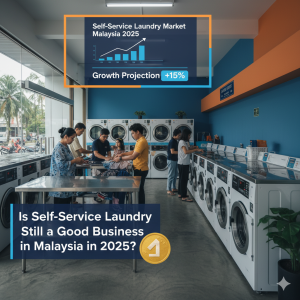
The Evolving Landscape of Malaysian Urban Living
Malaysia’s rapid urbanization continues to be a significant driver for the self-service laundry industry. As more individuals and families move into apartments and high-rise condominiums, access to in-house laundry facilities often becomes limited or impractical. Key Statistics:
- Urbanization Rate: The World Bank reported Malaysia’s urbanization rate at approximately 77.7% in 2022, projected to rise further. This demographic shift directly translates to a larger pool of potential self-service laundry users.
- Household Size: While household sizes are generally decreasing, the sheer volume of households in urban areas provides a consistent demand base.
This trend creates a natural need for accessible, efficient, and affordable laundry solutions outside the home. For many, self-service laundromats fill this void perfectly.
Convenience: The Unchanging Pillar of Demand
In a fast-paced world, convenience reigns supreme. The self-service laundry model inherently offers this. For busy professionals, students, and families, the ability to wash and dry multiple loads quickly and efficiently, often outside traditional business hours, is invaluable. Factors Contributing to Convenience:
- 24/7 Availability: Most modern self-service laundromats operate round the clock, catering to diverse schedules.
- Reduced Time Commitment: High-capacity machines significantly cut down laundry time compared to smaller domestic units.
- Elimination of Maintenance: Users avoid the capital expenditure and ongoing maintenance of owning a washing machine and dryer.
This convenience factor is not a fleeting trend; it’s a fundamental aspect of modern consumer preference that will continue to drive demand in 2025 and beyond.
Economic Resilience: A Stable Investment?
One of the attractive aspects of the self-service laundry business is its perceived economic resilience. Laundry is a fundamental need, not a luxury, making it less susceptible to economic downturns compared to discretionary spending. Considerations for Economic Resilience:
- Necessity vs. Luxury: Even during periods of economic uncertainty, people still need clean clothes.
- Affordability: Self-service laundromats often offer a more cost-effective solution than commercial laundry services or purchasing and maintaining personal machines.
- Low Operating Overheads (Relative): Once the initial investment in machinery and setup is made, ongoing operational costs (rent, utilities, minimal staffing) can be managed efficiently.
However, careful financial planning and location scouting are paramount to ensuring profitability, even in a resilient market.
Technological Advancements: Beyond Just Coins
The “coin laundry” moniker is increasingly becoming a misnomer. Modern self-service laundromats are embracing technology, enhancing both customer experience and operational efficiency. Key Technological Innovations:
- Cashless Payment Systems: Integration of e-wallets (Touch ‘n Go, GrabPay, Boost), credit/debit cards, and dedicated loyalty apps simplifies transactions and reduces the risk associated with cash handling.
- Smart Machine Connectivity: Remote monitoring of machine status, usage patterns, and predictive maintenance alerts optimize operations and minimize downtime.
- Customer Apps: Allowing users to check machine availability, receive notifications when their laundry is done, and even reserve machines.
- Enhanced Security: CCTV surveillance with remote access provides peace of mind for both operators and customers.
These technological upgrades not only improve convenience for customers but also streamline management for operators, making the business more attractive and efficient.
Competitive Landscape and Differentiation
While the market is robust, it’s also competitive. Success in 2025 will hinge on effective differentiation and strategic positioning. Table: Factors for Differentiation in Self-Service Laundry
| Factor | Description | Impact on Business |
|---|---|---|
| Location | High-traffic areas, residential dense zones, near universities/colleges, public transport hubs. | Direct correlation with footfall and customer acquisition. |
| Machine Quality | Reputable brands (e.g., Electrolux, Speed Queen), well-maintained, varying capacities. | Customer satisfaction, reduced downtime, energy efficiency. |
| Cleanliness | Impeccable hygiene, regular cleaning schedules, pleasant ambiance. | Crucial for attracting and retaining customers; directly impacts perception of quality. |
| Value-Added Services | Detergent/softener dispensers, folding tables, seating areas, free Wi-Fi, air-conditioning. | Enhances customer experience, encourages longer stays, can justify premium pricing. |
| Pricing Strategy | Competitive pricing, loyalty programs, bundled wash & dry options. | Attracts price-sensitive customers while rewarding loyal ones. |
| Security | Good lighting, CCTV, emergency contact information. | Builds trust and ensures a safe environment for users. |
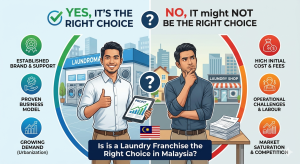
Entrepreneurs looking into a self-service laundry franchise Malaysia will often find that established brands have already addressed many of these differentiation points, offering a proven business model and brand recognition.
Regulatory Environment and Business Setup
Setting up a self-service laundry in Malaysia requires adherence to local regulations and obtaining necessary permits. Key Regulatory Considerations:
- Business Registration: Registering with SSM (Companies Commission of Malaysia).
- Local Council Permits: Obtaining specific permits from the local municipal council (e.g., business premise license, health license).
- Fire Safety: Ensuring the premises meet fire safety standards and obtaining a Fire Certificate (FC).
- Utilities: Securing appropriate commercial rates for water and electricity.
Understanding these requirements is crucial for a smooth coin laundry business setup Malaysia. It’s advisable to consult with local authorities or experienced consultants to navigate the regulatory landscape effectively.
The Atos Laundry Advantage
At Atos Laundry, we understand the intricacies of the self-service laundry market. Our expertise extends beyond providing high-quality laundry solutions; we also offer insights into market trends, operational best practices, and support for entrepreneurs. We believe that with the right strategy, location, and technological integration, the self-service laundry business in Malaysia will continue to be a viable and profitable venture in 2025 and beyond.
Conclusion: A Resilient and Evolving Opportunity
Based on the analysis of urbanization trends, unwavering demand for convenience, economic resilience, and technological advancements, the self-service laundry business in Malaysia remains a good business in 2025. While competition exists, strategic planning, a focus on customer experience, and embracing modern technology will be key differentiators for success. For prospective entrepreneurs, this sector offers a compelling blend of stability, recurring revenue potential, and a business model that directly addresses the evolving needs of Malaysian consumers. With careful research, a robust business plan, and a commitment to operational excellence, the future of self-service laundry in Malaysia looks bright.
 English
  繁體中文
繁體中文  Bahasa Melayu
  தமிழ்
தமிழ்