
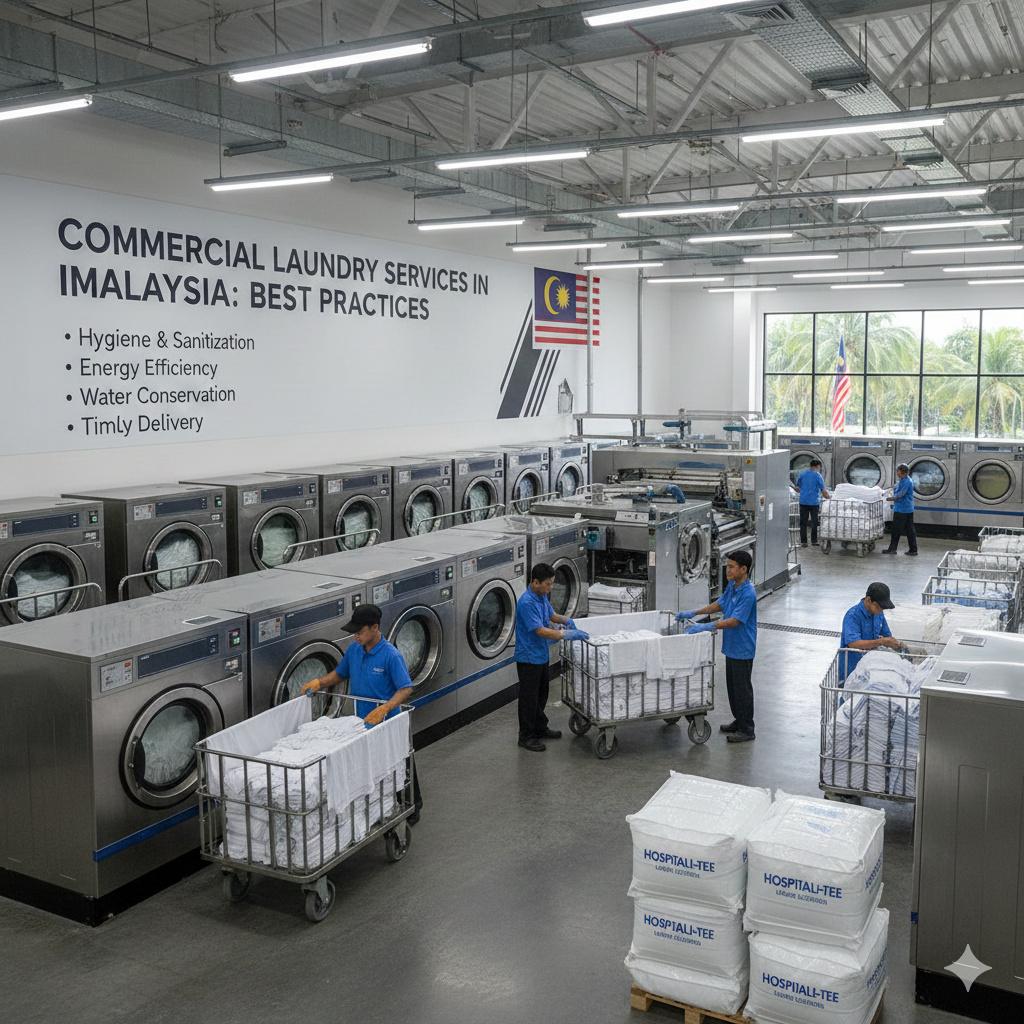
In Malaysia’s dynamic hospitality, healthcare, and industrial sectors, efficient and reliable laundry operations are not merely a convenience but a cornerstone of customer satisfaction, hygiene standards, and ultimately, business success. For organizations managing significant volumes of textiles, from crisp hotel linens to sterile hospital scrubs and heavy-duty industrial uniforms, the decision to internalize laundry processes or outsource to a dedicated commercial laundry service provider in Malaysia is critical.
This blog post, drawing on our expertise as Atos Laundry, delves into the best practices for optimizing commercial laundry operations in Malaysia. We aim to equip businesses with the knowledge to make informed decisions, whether they are establishing an in-house facility or seeking a trusted partner for industrial laundry Malaysia needs.
Understanding the Malaysian Commercial Laundry Landscape: Trends and Demands
The Malaysian market for commercial laundry services is characterized by several key trends:
Growing Hospitality Sector: With tourism rebounding and new hotels emerging, the demand for high-quality, timely laundry services for linens, F&B textiles, and guest dry cleaning is consistently high.
Stringent Healthcare Regulations: Hospitals, clinics, and aged care facilities face strict hygiene and infection control protocols. Laundry services must comply with Ministry of Health guidelines, including precise washing temperatures, chemical usage, and segregation of contaminated items.
Industrial Sector Needs: Manufacturing plants, oil & gas companies, and construction firms require specialized cleaning for uniforms, PPE, and workwear, often dealing with grease, chemicals, and heavy soiling.
Sustainability Imperatives: Increasing awareness of environmental impact drives demand for eco-friendly laundry solutions, including water and energy conservation, and the use of biodegradable detergents.
Technology Adoption: Automation, IoT-enabled machinery, and advanced tracking systems are becoming more prevalent, offering greater efficiency and transparency in laundry operations.
According to a report by [cite a relevant market research report if available, e.g., “Mordor Intelligence on Laundry Care Market”], the Asia-Pacific region is witnessing significant growth in the commercial laundry sector, driven by these factors. Malaysia, with its robust economic development and expanding service industries, is a key contributor to this trend.
Key Pillars of Best Practices in Commercial Laundry Services
Achieving operational excellence in commercial laundry hinges on a multi-faceted approach. Here are the critical areas to focus on:
1. Equipment and Technology Investment: The Engine of Efficiency
The right machinery is paramount. Modern commercial laundry equipment offers significant advantages in terms of efficiency, quality, and cost-effectiveness.
High-Efficiency Washers & Dryers: Investing in industrial-grade washers with precise dosing systems and high-speed extractors significantly reduces water and energy consumption, while shortening drying times. For instance, modern industrial washers can achieve extract speeds that remove up to 60-70% of water, drastically cutting down drying energy.
Automated Ironers & Folders: For high-volume items like sheets and tablecloths, automated ironers and folders not only improve throughput but also ensure consistent finish quality. This minimizes manual labor and reduces the risk of human error.
Advanced Detergent Dosing Systems: Computerized dosing systems ensure the correct amount of detergent, bleach, and softeners are used for each wash cycle, optimizing cleaning results and preventing chemical waste.
Water Recycling & Heat Recovery Systems: To address sustainability concerns and reduce operational costs, incorporating water recycling and heat recovery units can significantly lower water and energy consumption. Some systems can recover up to 70% of the water used in the wash process.
Graphic Idea: A simple infographic illustrating “Before & After” water/energy consumption with modern vs. outdated laundry equipment.
2. Process Optimization and Workflow Management: Streamlining Operations
Efficient workflow is crucial for minimizing bottlenecks and maximizing productivity.
Lean Principles: Applying lean methodologies to identify and eliminate waste (e.g., unnecessary movement, waiting times, over-processing) can significantly improve throughput and reduce operational costs.
Batching and Segregation: Proper segregation of laundry items by fabric type, degree of soiling, and contamination level is essential. This prevents cross-contamination and ensures appropriate washing cycles are applied, extending textile lifespan.
Standard Operating Procedures (SOPs): Detailed SOPs for every stage of the laundry process – from collection and sorting to washing, drying, finishing, and delivery – ensure consistency, quality, and compliance with hygiene standards.
Inventory Management: Effective tracking of linen inventory, including par levels and loss rates, is vital for preventing shortages and managing replacement costs. RFID tagging is increasingly being used for automated tracking.
Table Idea: A simple table outlining “Typical Commercial Laundry Workflow Stages” with brief descriptions.
| Stage | Description |
|---|---|
| Collection | Gathering soiled linens from various departments/clients. |
| Sorting | Segregating by fabric type, color, soil level, and article type. |
| Washing | Applying specific wash formulas based on textile and soil. |
| Extracting | Removing excess water through high-speed spinning. |
| Drying | Tumble drying or flatwork ironing to remove remaining moisture. |
| Finishing | Ironing, folding, pressing, and repairing. |
| Quality Control | Inspecting for cleanliness, damage, and proper finishing. |
| Packaging | Wrapping and preparing clean linens for delivery. |
| Delivery | Transporting clean linens back to the client/department. |
3. Quality Control and Hygiene Standards: Non-Negotiable Imperatives
Maintaining impeccable standards of cleanliness and hygiene is paramount, especially in healthcare and hospitality.
Microbiological Testing: Regular testing of washed linens and laundry surfaces for bacterial count ensures that disinfection protocols are effective. This is particularly critical for healthcare laundries.
Chemical Management: Proper handling, storage, and precise dosing of detergents, disinfectants, and bleaches are essential for both cleaning efficacy and employee safety.
Preventive Maintenance: Regular maintenance of all machinery prevents breakdowns, ensures optimal performance, and extends equipment lifespan, directly impacting wash quality.
Staff Training: Comprehensive training for laundry personnel on hygiene protocols, equipment operation, chemical handling, and quality inspection is crucial.
Fact: The World Health Organization (WHO) emphasizes the critical role of clean linen in preventing healthcare-associated infections (HAIs). A study published in the American Journal of Infection Control highlighted that proper laundry processing reduces bacterial load on textiles by over 99.9%.
4. Sustainability and Environmental Responsibility: A Modern Mandate
Businesses in Malaysia are increasingly prioritizing eco-friendly practices.
Water Conservation: Implementing water-efficient machinery, water recycling systems, and optimizing wash formulas to reduce water usage per kg of laundry.
Energy Efficiency: Utilizing energy-efficient equipment, heat recovery systems, and optimizing drying processes to minimize energy consumption.
Eco-friendly Detergents: Using biodegradable and phosphate-free detergents to reduce environmental impact.
Waste Reduction: Minimizing textile waste through repair programs and responsible disposal of condemned linens.
Reference: The Malaysian government’s commitment to sustainable development, as outlined in the 12th Malaysia Plan, encourages businesses across all sectors to adopt greener practices. This extends to industries like commercial laundry, where resource consumption is significant.
Choosing the Right Commercial Laundry Service Partner in Malaysia
For businesses opting to outsource their laundry needs, selecting the right partner is paramount. When considering a commercial laundry service Malaysia provider, evaluate them based on:
Expertise and Experience: Look for providers with a proven track record and specialized experience in your industry (e.g., healthcare, hospitality, industrial).
Capacity and Scalability: Ensure they can handle your current volume and scale up as your business grows.
Technology and Equipment: Assess their investment in modern, efficient, and sustainable laundry technology.
Hygiene and Quality Assurance: Inquire about their quality control processes, hygiene protocols, and certifications (e.g., ISO, HACCP).
Logistics and Reliability: Evaluate their collection and delivery schedules, ensuring they align with your operational needs.
Transparency and Communication: A good partner will offer clear communication, detailed reporting, and transparent pricing.
Sustainability Practices: Understand their commitment to environmental responsibility.
At Atos Laundry, we pride ourselves on embodying these best practices, offering comprehensive and specialized industrial laundry Malaysia services designed to meet the unique demands of various sectors. Our commitment to advanced technology, stringent quality control, and sustainable operations ensures that our clients receive not just clean linen, but peace of mind and operational efficiency.
Conclusion
Operational excellence in commercial laundry services in Malaysia is a continuous journey of improvement, driven by technological innovation, process optimization, and an unwavering commitment to quality and sustainability. Whether managing an in-house facility or partnering with a dedicated provider, embracing these best practices will lead to significant benefits: enhanced hygiene, extended textile lifespan, reduced operational costs, and ultimately, superior service delivery to your customers. Investing in these areas is not just an expense, but a strategic decision that underpins the success and reputation of any business reliant on pristine textiles.
Commercial Laundry Services in Malaysia: Best Practices for Operational Excellence
In Malaysia’s dynamic hospitality, healthcare, and industrial sectors, efficient and reliable laundry operations are not merely a convenience but a cornerstone of customer satisfaction, hygiene standards, and ultimately, business success. For organizations managing significant volumes of textiles, from crisp hotel linens to sterile hospital scrubs and heavy-duty industrial uniforms, the decision to internalize laundry processes or outsource to a dedicated commercial laundry service provider in Malaysia is critical.
his blog post, drawing on our expertise as Atos Laundry, delves into the best practices for optimizing commercial laundry operations in Malaysia. We aim to equip businesses with the knowledge to make informed decisions, whether they are establishing an in-house facility or seeking a trusted partner for industrial laundry Malaysia needs.
 English
  繁體中文
繁體中文  Bahasa Melayu
  தமிழ்
தமிழ்