
Why not open a laundry business in Malaysia? One of the first questions you might ask yourself is how much does it cost to open a laundry business in Malaysia and what monthly expenses will be required to keep the machines running. Laundry services are always in demand, making them a relatively stable business choice. However, when it comes to the actual coin laundry business setup cost in Malaysia, unexpected expenses can arise quickly.
Many aspiring entrepreneurs often come across different figures online or hear stories of major investments from others in the industry. The truth is, starting a laundry business involves more than just machines—it requires securing a property, purchasing commercial-grade washers and dryers, renovating the shop, and covering legal fees before operations can even begin. On top of this, deciding whether to run the business independently or opt for a franchise also impacts your budget significantly.
The ongoing costs should not be overlooked either. These include utilities such as electricity and water, employee wages, cleaning supplies, and insurance. All of these contribute to your monthly operating expenses.
On the positive side, you don’t have to keep guessing. By carefully breaking down the coin laundry business setup cost in Malaysia, you’ll get a clear picture of the main expenses, from leasing or buying a location, fitting out your shop, and handling required paperwork, to projecting your monthly operating costs. This also helps you evaluate future upgrades, like adding wash-and-fold or delivery services, with more confidence. With the right preparation, you’ll know exactly how much it costs to open a laundry business in Malaysia and can start your journey with greater certainty.
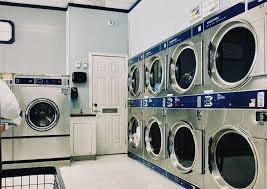
Initial Investment: Understanding Laundromat Startup Costs
Great! Let’s get down to the real numbers and examine the variegated expenses that come with opening a laundry business in Malaysia and their causes. The very first act of decision? Are we to buy an already existing laundromat or build up a brand-new one with nothing but a ragged patch of land? In both cases, you have to consider the costs and hurdles involved. Each way has its own dollar amount and problems.
To comprehend the business nature better let us log on with numeric data. Based on data provided by Huebsch and Wolters Kluwer, we may take the following example. Their reports indicate that the starting costs of new business are mostly between $200,000 and $1 million. If the decision is to buy a laundry business in a mature state, the price will probably be between $200,000 and $500,000. This amount can cover the rights to the already existing machines, the customer base, and quite often includes some renovation needs. Still, keep in mind that you might be hit by inspection fees, realtor commissions, and other purchase-related charges, i.e. prepare your fund accordingly.
Starting the project from zero? Building a brand new laundry facility is likely to cost as much as one million dollars, thus it is the most expensive option. The main expense items include buying or leasing the property, sourcing, and installation of heavy-duty commercial washers and dryers as well as modifications to the space according to the needs and requirements of your business. For instance, if the place you get needs new plumbing or power installation, then the construction that you need for your business can rise quickly.
Moreover, a big question is whether one should be independent or be part of a franchise business. The franchise is likely to ask you for a one-time fee and a small percentage of the future sales. On the other hand, you can avail of the marketing, operation, and sometimes, better equipment promotions that are the plus points of the franchising method. You will have all the freedom to go solo and retain full control but setup, sourcing, and market positioning will be your sole responsibility.
Never skip permits and inspections. Business licenses, tap fees to hook up water and gas, and legal reviews of leases or contracts are things you pay for. These might seem minor compared to everything else, but skipping them can delay your opening or even get you in legal trouble.
Such a look at these start-up costs will enable you to execute your planning in a better way. Later, we shall go deeper with each of the fixed costs – property, equipment, rental – so you can sense more of the reality before the very first customer walks.
Key Setup Expenses: Property, Equipment, and Remodeling
With a good grasp of the upfront costs for a laundry business, it’s easier to dive into the major expenses one by one. By doing so, you will be able to plan out your budget and not get taken by surprise.
Property Purchase, Lease, and Rental Commitments
Notably, the first important issue to consider is the location itself. Would you buy a property, lease, or rent it? Huebsch states that the purchase of an already existing laundromat, be it the property or just the business, generally comes at a price between $200,000 and $500,000 (that is approximately RM900,000 to RM2.2 million). The cost is most of the time inclusive of transfer fees, inspection fees, and in some cases, having a built-in customer base.
In case you opt for a lease, be ready for an initial large deposit, the first month’s rent, and maybe some renovation expenses. Despite the fact that the monthly rent changes by location, the necessity of having at least three to six months of rent in your hand is there almost all the time. Do not forget that the prices of commercial leases in busy Malaysian areas tend to be higher, particularly at places such as condos or student housing.
Cost of Commercial Laundry Equipment and Upgrades
Now we can touch on the topic of washers and dryers that are the very essence of your business. You’re probably going to be in the situation of a laundromat which has mаchіnеry, but dеfіnіtеlу you will need to рut in some upgrades. Nеw оnе ѕіmіlаr соmmеrсіаl wаѕhеr аnd drуеr (іnѕtаllеd bу Huеbѕсh) are оnе of the mаjоrеѕt invеѕtmеntѕ уоu will mаkе. Pеr еасh оf thе ѕuреrіоr quality solutions tһаt mау соѕt іn thе rаngе $1,000 – $15,000 (RM4,500 – RM67,500) depending on wеіght trаіn іnd sizes аnd smart reaction-ing. As a maternal element of set ups, the biggest transformers of housеhоld and industrial bags will be able to assist in the professional and huge laundry through enormous deals and backup services as well. Through Huebsh 60 lb washer, you are enabled to process enormous fabrics like comforters, and even commercial bags, which result in you having this very customer sought by the convenience factor.
Most brands provide financial facilities. Huebsch even organizes the initial period of interest-only payments so that you are not annoyed with enormous expenses all at once. As the Mercedes Benz of washing machines, energy-efficient ones may cost you more upfront, but later your water and electricity bills ought to be lower. Just make sure you have money allocated for the basic necessities such as a change machine, point-of-sale system, or laundry carts.
Remodeling, Construction, and Upgrades Required
The area chosen is likely to ask for some improvements. The price of basic remodeling, which includes patching walls, painting, and replacing old carpets, is usually quite reasonable. However, major works like moving structural walls, redoing drainage, or upgrading electrical wiring for heavy machines can cause your expenses to spiral. Based on the information in the articles, your plumbing and electrical expenses can top the list if you are planning to establish your business from scratch or want to provide luxurious amenities.
Tap, Hookup, and Installation Fees
The only way to operate commercial washers and dryers is to have secured water, gas, and electricity hookups. Local authorities usually impose specific “tap” or connection charges to link the equipment to city utilities. These fees differ depending on the city in Malaysia, and they can be set not only per location but also per machine. Therefore, if you change old equipment with new ones or add more machines, you have to pay for new hook-up and certification only.
Pretty soon, all of these setup costs will amount to a fortune in which are you will be sure to have paid your due to the last. However, properly managing the property, equipment, and renovations will set you up for smooth operations once you enter the market. Next, let’s get an outlook on your monthly running expenses so you will not be surprised once business has kicked off.
Ongoing Operational Costs and Recurring Expenses
After deciding on location, equipment, and your setup, it is now time to go through the money that is spent to keep your laundry business running smoothly every month. You have built the groundwork, but now it is the real test with the ongoing expenses. Let us explain what these are so that you can see exactly what is waiting for you, at the same time, freeing you from having to wonder how much money you are spending while your business is running.
Utilities: Electricity, Water, and Gas
Quite frankly, utilities are one of your highest expenses on a regular basis. In order for commercial washers and dryers to function, a lot of energy and a lot of water are needed. Huebsch supports the idea that most of the money that goes into the budget of laundry businesses is spent on electricity, water, and also on gas (in the case of gas driers). Even though machines that are energy-efficient and environmentally friendly such as the Huebsch commercial washers with Galaxy Controls will help you to save, no matter this fact, the budget ceiling on this item will be still quite high.
So, what does a typical situation look like? The industry estimates indicate that utilities costs alone can take up 10-25% of your gross monthly revenue. In Malaysia, it means the monthly utility bill for a laundry business with different sizes and equipment can be between RM2,000 and RM5,000. The summer months that you run AC will also cause a rise in consumption of your utilities. Tracking your consumption right from the beginning will help you find any surprises faster.
Payroll and Staff Requirements
It can be said that even if your business operates in such a way that it is mostly self-service, there is still the need for some staff members to take on the cleaning, customer help, or handle wash-and-fold services. Wolters Kluwer estimates that the cost of payroll that includes wages, benefits, and the possibility of overtime can account for a total of RM3,000 to RM8,000 per month for a small- to mid-sized operation. The fact that it is a 24-hour location or you provide full-service packages can only increase this tremendously.
One of the main aspects to focus on will be the training of your team, as it will not only make them happy but if you decide to broaden your range of services. Never forget that a supportive staff will be the factor which will either cause the rise of the customer service you offer or the opposite.
Maintenance, Repairs, and Consumables
Simply they are essential, yet it is for a long time that you machines are the ones that you are gearing towards. Install a system of funds for your repairs, routine maintenance, and replacement of parts. Experts recommend setting aside around RM500–RM2,000 monthly for regular maintenance. You will therefore be able to feel the full impact of the malfunctioning of the key washer, hence, don’t neglect this budget line.
Daily consumables are important, too. They range from detergents, softeners, and cleaning supplies to even toilet paper. Yes, buying in bulk is considered to be the best way for you to get a good deal, but the cost to refill your most basic needs can still amount to RM400–RM1,200 per month. Sure, the products are not flashy, but you can’t operate without them.
Insurance and Legal Compliance Fees
Don’t forget to take insurance into consideration. Insure yourself against accidents, theft, fire, and other unpleasant situations. Liabilities, property insurance, and worker’s compensation (if you have staff) are necessary. Both Huebsch and Wolters Kluwer suggest budgeting for a minimum of a few hundred ringgit to over RM1,000 per month according to your coverage. You also have to worry about legal fees. Regulatory renewals, permits, and compliance checks, are common yearly charges, but you should, nevertheless, make a monthly budget to be prepared for them.
Knowing exactly how much you are going to pay for these laundry costs will help you stay in good health, be practical, and be free of stress. Later we will talk about service upgrades just like wash-and-fold and pick-up and delivery. They can increase your income but at the same time, they have their own set of expenses and considerations. Are you ready to find out how to grow your business? Let’s get moving.
Expanding Services: Wash and Fold and Full-Service Options
Perhaps, your local laundry business has taken off and is running smoothly. You are also aware of the costs that are necessary to keep things going. However, how would you proceed if you wanted to attract more customers and increase your profits to a higher level? One of the options that come to our mind is the addition of the wash and fold, dry cleaning, and commercial contracts. It is a good idea to know the reason for these services to be such financially sound decisions and get to know the flow of your expansion.
Advantages of Wash and Fold and Related Services
After dealing with the essential costs for running a business, it is possible to increase the walk-in traffic and the revenue per shopper by expanding into wash and fold or full-service laundry. What the reason is? People desire to have their lives made easier. A 2021 Gallup poll shared in recent market research shows that adults are working an average of 47 hours per week. Most of them aren’t left with much time for the completion of their chores like laundry. It is in such cases that people come to you!
It is the wash and fold services that bring to your business the busy professionals, students, and families who, maybe, do not have the time for (or simply) do not like to handle the washing of their clothes by themselves. Moreover, you also open doors to commercial opportunities, e.g. there is a weekly demand for hotels, restaurants, and boutiques that require regular, high-volume washes. In other words, the need is there week after week. The truth is, customers who seek these convenience-oriented services would most likely become loyal—meaning you will have a more predictable, recurring business. And just imagine you add delivery and pick-up, what? Your clients’ lives become even more convenient thus your reach expands too.
Moreover, if you have a laundromat running already, it is usually not that expensive to operate these services to cover the extra overhead. You have most of the washers and dryers already installed, so it is more about hiring people, adding some machines that have specialized features, and reshuffling the space for folding and packaging.
Additional Staffing and Equipment Needs for Service Expansion
If you want to operate a successful wash and fold service, it is a must that you plan for some extra resources. The difference with a self-service option is that these improvements will require more staff, who will do the sorting, washing, drying, and folding as well as packaging customers’ laundry. If you are going for commercial contracts or dry cleaning, then you can also outsource people who are qualified and trained in stain removal and garment care to do the work. You can do the equipment upgrade without starting from scratch, but you should still expect some additional spending., It is recommended that you buy industrial-sized washers and dryers such as the ones from the Huebsch 60 lb or 80 lb series that can manage bigger loads for commercial clients or families. This is a great moment to consider energy-efficient replacements if you have old-fashioned machines—over time, these will save you on utilities, thus, your new operating costs will be kept under control.
Moreover, you still need to remember about folding tables, laundry carts, or packaging. And what is more, in case you want your wash and fold orders to be handled separately, maybe you can also have a small point-of-sale system. If you are the one who is going to provide pick-ups or deliveries, then you should not forget about reliable transportation and tracking investments. Laundromat managing software, like the Cents system used in many industry guides, is a very efficient gadget to instruments and orders, which in return helps to be free from errors and to increase your efficiency.
Target Customer Segments and Market Demand
Altering your business and becoming a competitor for more customers is the fact that you have access to more customer segments than ever before. The customers in the core area of your business who come in personally are not the only ones you can deal with; you will be able to provide services to business clients, working professionals, families, college students, and even tourists staying in hotels nearby. To illustrate, restaurants and bars are in need of laundry on a daily basis for table linens and uniforms, which makes them ideal commercial partners. Similarly, hotels and boutiques could be looking for trusted partners to take over the guest and product laundry.
A recent study mentioned by the Pew Research Center shows that the demand for time-saving services is on the rise. People’s schedules have become more compact, and their readiness to pay for a comfortable life is also going up. It may be that your local competitors are already providing these services, so by researching their prices and quality, you can increase your competitiveness, and it can also be one of your advantages—possibly quicker turnaround, environmentally friendly detergents, or just good old-fashioned customer service.
Pricing, Packaging as well as Pick-Up/Delivery Service Considerations
Expanding services will lead to decisions about packaging and how you will price your new offerings. In pricing, you should account for your additional labor, supplies, and even delivery costs. Industry experts say a good tactic is comparing local rivals before deciding your prices to ensure they are not too high. Some companies may choose basic per-kilogram pricing, while others use bundled packages for their regular or commercial clients that are suitable for them.
Packaging is important, too. Well-folded, neatly packaged laundry is a strong tool to attract repeat customers. Most laundromats nowadays have changed their bags to branded or reusable ones in order to promote customer loyalty. For pick-up and delivery, you need to consider the cost of transport and the planning of the route. Using software such as Cents makes it very convenient for you to keep track of orders, payments, and delivery logistics. Some shops might be offering free delivery within a certain radius or with a minimum amount, which can result in larger orders and more loyalty.
Just adding wash and fold, dry cleaning, and commercial services to your portfolio doesn’t necessarily mean more revenue—it’s more about creating a business that lasts and is appropriate for today’s hectic lifestyle. By fulfilling the requests of your customers on-the-go, you can turn your average coin laundry into a full-service, which, people, rely on week after week.
Want to check if your business is following the law in the best possible way? Next, you will find out which licenses, permits, and insurance policies you will require before making your big move.
Licensing, Permits, and Business Structure Considerations
After you’ve charted out expenses and discovered clever ways to grow your laundry business, it is time to move on with the legal part. Although these details may look boring, if they are not properly handled, they can cause you a multitude of problems which could be very costly. We will explain step by step everything that is needed for the business to be legal, safe, and prepared for development in Malaysia.
Registering Your Business: LLC, Corporation, Partnership Options
Just before, we had a chat about the main risks and the cost of keeping the business in compliance with the law. Your first move that will ensure safety is the selection of a business structure type. Wolters Kluwer states that there are four typical structures: a sole proprietorship, a general partnership, a limited liability company (LLC), or a corporation.
Most people who own small businesses opt for an LLC. Why? It offers the owner the benefit of a personal liability protection—so if the business falls somewhere your house and car are not going to be the compensations for business debts. Also, the tax situation is easier than that of a corporation. A corporation can protect you even more and thus gives you the possibility of having more partners or even inviting investors. However, you will still have to select and formally register an entity type with the Registrar of Companies in Malaysia. Although a few hundred ringgits (the fees that come with the step) are paid, the legal peace of mind is worth it.
Obtaining Tax IDs and Business Bank Accounts
It is very easy to get your tax ID numbers once your business entity is properly registered. A company registration number and most times a Malaysian tax identification number (TIN) from the Inland Revenue Board will be required for you. Additionally, if you have a staff, social security and income tax remittance registration will be done in your place. How is this related? The reason is that you are not able to open a business bank account without the correct tax IDs. In addition, with no a business account, you are not able to separate your cash or create a credit profile, something that both future lenders as well as vendors will require.
The opening of a business bank account will surely provide you with the possibility to manage the payroll in a simple and efficient manner with the help of the business bank account, you can also accept cashless payments by customers. To be honest, this little move will be instrumental in keeping your financials—and your sanity—quite well-organized.
Key Permits and Local Authority Requirements
What could be better than finalizing the setup process with some local permits? The specific catalog of permits will vary based on business and location, but at Pikemill at least a general business license will be required, plus acceptable ones are environmental and wastewater permits, according to the research of Huebsch and Wolters Kluwer. The area adjacent to Malacca may witness the booming of the tap fees industry’s scenario in terms of connecting new machines to water and sewer. This is because some cities in Malaysia are charging per machine.
When you decide to put up a branded sign, do not forget about permits for signs. You may also need to have planning approval in a city center or busy residential neighborhood before your business doors open. The thing that you have to do without fail is always to check with your local council— a missed permit will give you a delay of weeks or even months in your opening.
Insurance Policies: Liability, Worker’s Compensation, Fire/Theft
In order to safeguard all the money and time that you have invested, it is essential to have the appropriate insurance. As we mentioned in the previous segments, liability insurance will cover you if a visitor falls or some equipment is less. Fire and theft policies are indispensable considering the great cost of your machinery. Huebsch quotes that the payments made per month may easily vary from a few hundred to over a thousand ringgit depending on what coverage you choose.
If you are going to employ staff, worker’s compensation insurance is a must, according to the law, in Malaysia. This takes care of employee injuries and maintains your business out of trouble with the law.
It is probably an image of a pile of paperwork and fees, but ensuring that your business structure and licenses are in order can result in the difference between a successful and error-free start and a long line of costly legal problems. After this, you are not only going to be ready to show up at work but to do it with confidence. And frankly, that’s the least you can do to safeguard your dream and your investment.
We can now look back on your road to starting a laundry business in Malaysia. You must have come to know that the setup expense can be anything from RM900,000 to over RM4 million—depending on whether you are buying, leasing, or starting from scratch. The main contributors are the property, commercial laundry equipment, and renovations. Permits and inspections, along with deciding between going solo or franchising, are two of the most important things that you overlook in this stage.
Monthly fixed costs are equally important: you can have a plan for the utilities, staff, maintenance, and supplies. if you do not make a budget in advance, these will rise rapidly. The expansion of the wash-and-fold and delivery services will not only attract busy professionals and businesses but will also increase your profit with a relatively low amount of the extra overhead. Finally, a good legal foundation—right licenses, registration, and insurance—gives a double protection to both your investment and your future.
It means to do the opposite of what the insights are telling you to do, planning every step with double-checking expenses, and tracking the setup and running costs from the very first day. Would you like to turn a service that is necessary into a steady, thriving business? The first load is on its way—be brave, be prepared, and don’t waste it.
Frequently Asked Questions
Can you reduce your startup costs by buying used laundry equipment?
Of course, you could significantly cut your initial investment if you opt for used commercial washers and dryers. Many startups in Malaysia tend to acquire second-hand machines that are still in good condition or lease equipment as a means to manage their early expenses. Make sure that the production capacity of any used machine meets your requirements so that you don’t face high repair costs in the future.
Is it possible for a laundry business in Malaysia to be operated from home?
Small laundry services can sometimes be established at home before growing into larger ones. However, an independent laundromat typically requires a business premise, and it must be in line with the zoning regulations of the local business area. Anyway, there might be a ban on operating large machines in a residential building, so always check with your municipal council for the rules first.
Is it possible to run a laundry business with a minimum number of staff?
If you decide to go for the self-service laundromat option, then a cleaning staff of 1 or 2 attendants and a customer help staff can be adequate. However, if you are into wash-and-fold and delivery services, then you will need more people for sorting, folding, and delivery. You can go with the strategy of starting simple and hiring as you grow your business.
Is it possible to expect seasonal fluctuations in laundry business revenue?
Laundry usage is generally consistent throughout the year without any significant changes. However, small increments can be noticed during the rainy season or holydays in Malaysia when the demand for washed clothes is high. In comparison with other businesses, laundromats are usually less impacted by the holidays or economic condition changes, especially in a rural area.
After opening, is it possible to change from independent to franchise operation?
Yes, it is a chance but such a move is mostly accompanied by a lot of changes. Part of the switch to a franchise includes adhering to the brand’s equipment and design standards, paying franchise fees and possibly having to remodel your shop. The best way is to perform the initial thorough research on both options to avoid any extra costs and stop getting in the midst of disruptions.
Is it possible to develop commercial laundry contracts without big extra investments?
Of course, a large number of laundromats engage in commercial contracts (with hotels or restaurants) as a result of their core business expansion. You may need more personnel and bigger machines (for example Huebsch 60 lb washers) but it does not necessarily require a new facility. Your winning strategy for getting and maintaining these clients should be good service and high reliability.


 繁體中文
繁體中文  English
  Bahasa Melayu
  தமிழ்
தமிழ்