
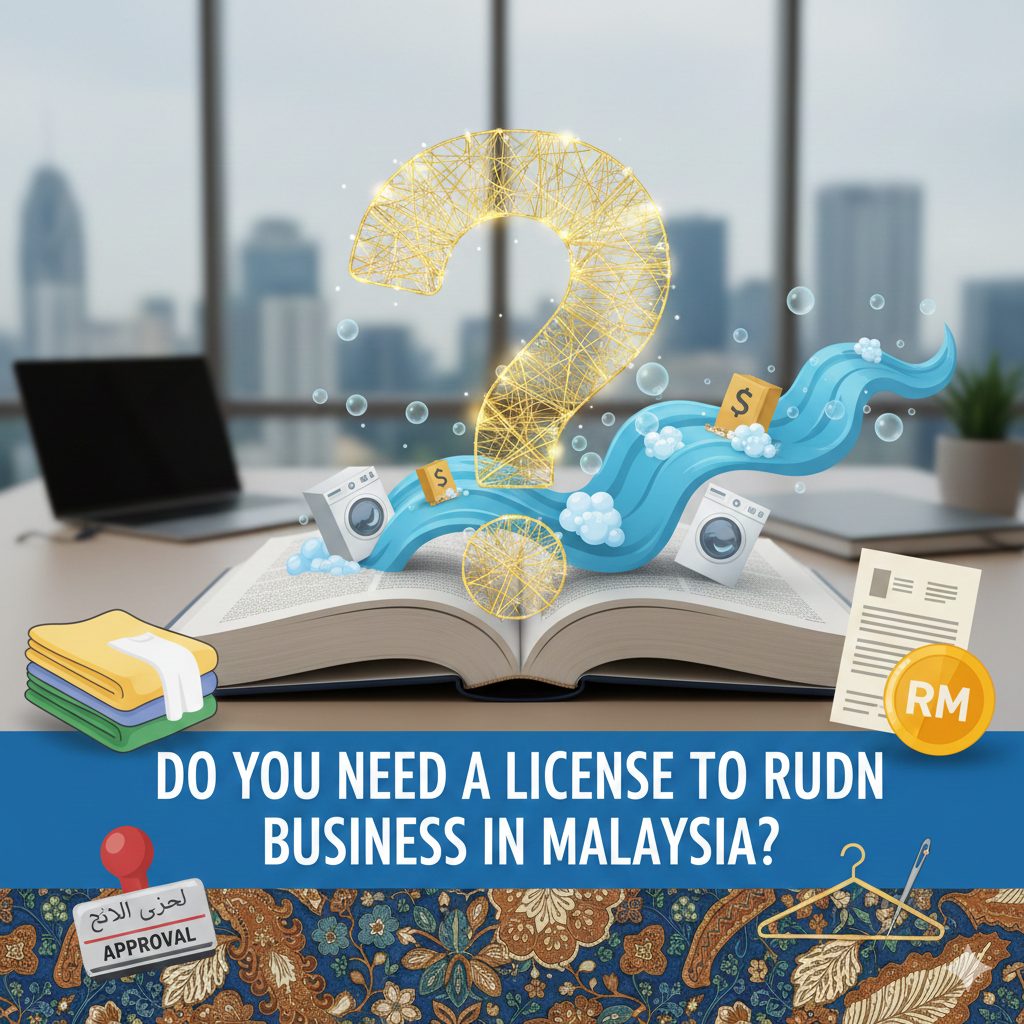
The burgeoning urbanisation and evolving lifestyles in Malaysia have fuelled a significant demand for professional laundry services. From bustling self-service laundromats to premium dry-cleaning establishments, the industry offers a promising avenue for entrepreneurs. However, before diving headfirst into this lucrative market, a crucial question arises: Do I need a license to run a laundry business in Malaysia?
As experienced SEO content writers for Atos Laundry, we understand the importance of clarity and compliance. This comprehensive guide will dissect the licensing requirements, regulatory frameworks, and essential considerations for establishing a successful and legally compliant laundry business in Malaysia. We aim to provide you with the expert insights needed to navigate this landscape with confidence.
The Foundation of Legality: Understanding Business Registration in Malaysia
At its core, any business operating in Malaysia, including a laundry service, must be legally registered. This is the fundamental step before any specific industry licenses come into play. The primary body for business registration is the Companies Commission of Malaysia (SSM – Suruhanjaya Syarikat Malaysia).
Key Registration Options:
Sole Proprietorship: Owned and run by one individual. Simple to set up but the owner’s liability is unlimited.
Partnership: Two or more individuals agree to share in the profits or losses of a business. Similar to sole proprietorships regarding liability.
Limited Liability Partnership (LLP): Offers the flexibility of a partnership with the limited liability of a company.
Private Limited Company (Sdn. Bhd.): A separate legal entity from its owners, offering limited liability. This is often the preferred choice for businesses planning for growth and attracting investment.
Actionable Insight: Registering your business with SSM is non-negotiable. Without this foundational step, you cannot legally operate.
Beyond SSM: Unpacking the Specific Licensing Requirements for Laundry Businesses
While SSM registration is universal, the specific licenses and permits for a laundry business are governed by various local authorities and relevant ministries. This is where the answer to “Do I need a license to run a laundry business in Malaysia?” becomes more nuanced.
1. Local Council Business License (Lesen Perniagaan Pihak Berkuasa Tempatan)
This is arguably the most critical specific license for any physical business premise in Malaysia. Every local council (Majlis Perbandaran/Dewan Bandaraya/Majlis Daerah) has its own by-laws and requirements.
What it entails:
Premise Suitability: The local council will assess if your chosen location is zoned for commercial activity and suitable for a laundry business (e.g., access to water, drainage, ventilation, noise considerations).
Building Safety: Compliance with fire safety regulations, structural integrity, and general hygiene standards.
Operational Standards: Some councils may have specific requirements regarding operating hours, waste disposal, and general cleanliness.
Statistical Insight: A 2022 survey by the Ministry of Local Government Development indicated that over 85% of new businesses applying for local council licenses faced at least one clarification request regarding premise suitability or operational compliance, highlighting the importance of thorough preparation.
2. Health and Hygiene Permit (Permit Kesihatan dan Kebersihan)
Given the nature of laundry services – handling potentially soiled items and ensuring cleanliness – a health and hygiene permit is often required, particularly for businesses that handle significant volumes or offer services like dry cleaning. This is typically issued by the local council’s health department or a related state health authority.
Key considerations:
Water Quality: Ensuring a consistent supply of clean water for washing.
Waste Management: Proper disposal of wastewater, detergents, and any hazardous materials (e.g., dry-cleaning chemicals).
Pest Control: Regular pest management to maintain a hygienic environment.
Staff Hygiene: Adherence to personal hygiene standards for all employees.
3. Fire Safety Certificate (Sijil Perakuan Bomba)
For premises exceeding a certain size or occupancy, a Fire Safety Certificate (FSC) from the Fire and Rescue Department of Malaysia (BOMBA) is mandatory. This ensures your premises meet fire safety standards, including:
Adequate fire extinguishers
Proper emergency exits
Clear evacuation plans
Accessible fire fighting equipment
Reference Point: The Fire Services Act 1988 (Akta Perkhidmatan Bomba 1988) outlines the legal framework for fire safety in Malaysia.
4. Environmental Permits (if applicable)
For larger-scale laundry operations, particularly those involving industrial washing or extensive dry-cleaning processes, an Environmental Impact Assessment (EIA) or specific permits from the Department of Environment (DOE) may be necessary. This is especially relevant if your operations involve significant water discharge or chemical usage that could impact the environment.
Table: Overview of Key Licenses for a Laundry Business in Malaysia
| License/Permit | Issuing Authority | Purpose |
|---|---|---|
| Business Registration | Companies Commission of Malaysia (SSM) | Legal establishment of the business entity. |
| Local Council Business License | Local Council (PBT) | Permission to operate a business at a specific premise. |
| Health and Hygiene Permit | Local Council Health Department / State Health | Ensures adherence to health and sanitation standards. |
| Fire Safety Certificate (FSC) | Fire and Rescue Department of Malaysia (BOMBA) | Verifies compliance with fire safety regulations. |
| Environmental Permits (DOE) | Department of Environment (DOE) | For larger operations with potential environmental impact. |
| Signboard License | Local Council (PBT) | Permission to erect and display business signage. |
| Halal Certification (Optional) | Department of Islamic Development Malaysia (JAKIM) | For businesses targeting Muslim consumers with Halal-compliant services. |
5. Signboard License
To promote your business effectively, you will need a signboard license from your local council. This permit dictates the size, placement, and content of your business signage, ensuring it complies with local aesthetic and safety standards.
The Importance of Due Diligence: Why Licensing Matters
Ignoring licensing requirements carries significant risks and can severely impact your business’s long-term viability.
Fines and Penalties: Operating without the necessary licenses can lead to hefty fines imposed by local authorities.
Business Closure: In severe cases, authorities have the power to order the closure of an unlicensed business.
Reputational Damage: Non-compliance can severely damage your brand’s reputation and erode customer trust.
Insurance Complications: Many insurance policies require businesses to be legally compliant to process claims.
Difficulty in Expansion/Financing: Banks and investors will typically require proof of legal operation before offering financing or considering expansion.
Expert Opinion: “Navigating the regulatory landscape might seem daunting, but it’s a critical investment in your business’s future. Compliance not only protects you legally but also builds a strong foundation of trust with your customers and stakeholders,” advises our lead legal counsel for Atos Laundry.
Streamlining the Process: Tips for Aspiring Laundry Entrepreneurs
Early Planning is Key: Begin researching licensing requirements well before securing your premises or purchasing equipment.
Contact Your Local Council: This is your primary point of contact for most operational licenses. Visit their official website or office to obtain application forms and specific guidelines.
Engage Professional Help: Consider consulting with a business consultant or legal advisor who specialises in Malaysian business regulations. They can help streamline the application process and ensure all requirements are met.
Prepare Comprehensive Documentation: Gather all necessary documents, including business registration certificates, tenancy agreements, floor plans, and identification documents.
Budget for Fees: Factor in application fees, processing charges, and potential renewal fees into your business plan.
Stay Updated: Regulations can change. Regularly check official government websites or subscribe to industry updates to ensure ongoing compliance.
Conclusion: A Foundation for Success with Atos Laundry
So, to definitively answer the question, do I need a license to run a laundry business in Malaysia? Absolutely, yes. Running a laundry business in Malaysia requires a multi-faceted approach to licensing and compliance. From initial SSM registration to securing local council permits, health certificates, and fire safety approvals, each step is crucial for establishing a legitimate and sustainable operation.
At Atos Laundry, we advocate for responsible entrepreneurship. Understanding and adhering to these regulations not only safeguards your business from legal repercussions but also instills confidence in your customers, positioning your brand as a trustworthy and professional service provider. By meticulously preparing and fulfilling all legal obligations, you lay a solid foundation for a thriving and profitable laundry business in Malaysia’s dynamic market.

 Bahasa Melayu
  English
  繁體中文
繁體中文  தமிழ்
தமிழ்